Making the Case for Ghana's Readiness for the AI Revolution
An exploration of Ghana’s readiness for the AI revolution, highlighting the nation's core advantage: the "algorithmic horsepower" and problem-solving capability of its youth. While talent and digital public infrastructure offer a strong foundation, the article outlines the critical gaps in data, computing power, and reliable infrastructure that must be bridged to transform local potential into true AI capability.
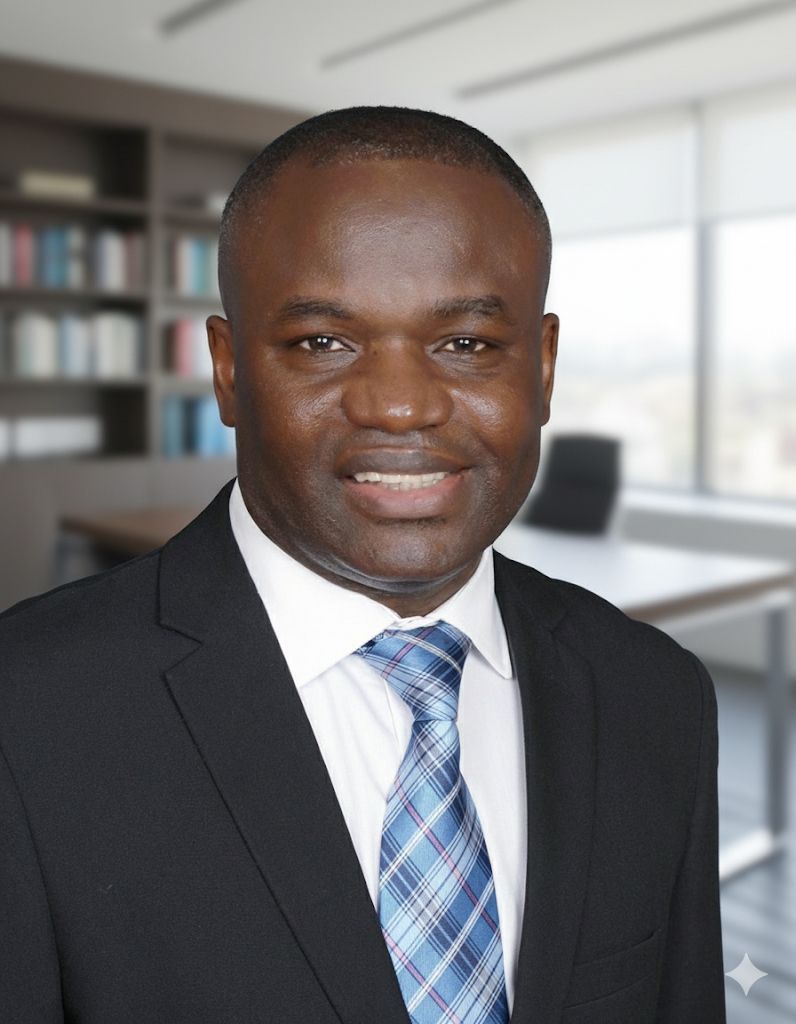
Dr. Eugene Frimpong
Is Ghana ready for the AI revolution?
My answer is: not quite—but we have what it takes to get ready.
AI depends on computing power, data, infrastructure, and investment. But beneath every successful AI system is something even more fundamental: human intelligence. That is where Ghana has an advantage.
Ghana’s Algorithmic Horsepower
I call it algorithmic horsepower: the ability to think logically, recognize patterns, question assumptions, work with numbers, solve problems, and learn quickly.
Ghana’s young population provides a substantial base of potential developers, analysts, entrepreneurs, and researchers. Universities and technical institutions add thousands of graduates to this talent pool each year. Initiatives such as the Ghana Code Club, the Ghana-India Kofi Annan Centre of Excellence in ICT, and the One Million Coders programme are expanding access to coding and digital skills. Startups and technology communities in Accra, Kumasi, and other cities also show that local talent can create solutions for local and international markets.
Across universities, workplaces, startups, and the informal economy, Ghanaian youth regularly solve problems with limited resources. This resourcefulness matters in the AI economy.
The question is not whether Ghanaian youth are intelligent enough for AI. It is whether we will provide the training, tools, mentorship, and opportunities needed to turn that intelligence into AI capability.
With investment in mathematics, data literacy, programming, machine learning, critical thinking, and problem-solving, we can develop a generation that does more than prompt ChatGPT.
We can build.
AI could help Ghana improve healthcare, agricultural productivity, education, financial security, road safety, public services, and policymaking. Digital platforms such as Ghana.gov.gh, the Ghana Card programme, and the Ghana Revenue Authority’s online services already demonstrate how technology can improve identification, access, transactions, and administration. The next step is to use responsibly governed data and AI to make these systems more predictive, responsive, and inclusive.
That is Ghana’s opportunity: using AI to solve Ghanaian problems within Ghanaian realities.
Potential Is Not Readiness
Talent alone does not make a country AI-ready.
AI needs data, yet many Ghanaian datasets remain fragmented, incomplete, inaccessible, or stored in paper records. Progress in digital identity, electronic health records, open data, and digital financial services is encouraging, but institutional silos, weak interoperability, data quality, privacy, and governance remain challenges.
AI also needs computing power. Ghana has important digital assets, including the National Information Technology Agency, the Kofi Annan ICT Centre, university research facilities, and commercial data centres. However, many researchers, startups, students, and public institutions still face limited or expensive access to advanced computing.
Finally, AI depends on reliable utilities: electricity, connectivity, cooling, and water. Ghana’s electricity access and internet connectivity have expanded, but reliability, affordability, quality, and regional disparities remain concerns. These constraints can prevent promising AI projects from moving beyond pilots.
Ghana therefore has significant AI potential, supported by a young population, growing technology ecosystem, mobile-money economy, digital public infrastructure, and expanding technical education. The task is to build the ecosystem that converts this potential into readiness.
We Don’t Need to Become Silicon Valley
Ghana does not need to become Silicon Valley to participate meaningfully in the AI revolution. We must identify where Ghana can compete, which problems AI can solve, and what capabilities we need to develop now.
Promising areas include agriculture, health, education, financial inclusion, logistics, climate resilience, public administration, and local-language services. Research in Twi, Ga, Ewe, Dagbani, and other Ghanaian languages could help ensure that AI serves people often excluded by systems designed primarily for English.
This requires training young people to become builders, adapters, researchers, entrepreneurs, and leaders, not merely consumers of foreign AI products. It also requires collaboration among universities, industry, government, and development partners through internships, shared laboratories, challenge funds, responsible data-sharing, and procurement opportunities for local innovators.
The countries that benefit most from AI will not necessarily be those with the greatest initial resources. They will be those that recognize their strengths, confront their weaknesses, and deliberately build the capabilities required to compete.
Ghana has something worth betting on:
the algorithmic horsepower of its young people.
Let’s train it.
Let’s unleash it.
Let’s put it to work solving Ghanaian problems.
The AI revolution is already moving. Ghana cannot afford to watch from the sidelines.
In subsequent articles, I will examine Ghana’s data, infrastructure, skills, policy, and investment challenges—and the opportunities that could emerge if we address them effectively.
Understand it. Use it. Lead with it.
About Dr. G
Dr. Eugene Frimpong (Dr. G) is a data analytics and AI practitioner, educator, researcher, and founder of Frimps Intelligenz, with more than two decades of experience in data, analytics, and predictive modeling. He holds a Doctor of Business Administration in Data Analytics, with research focused on Ghana’s readiness for big data analytics. His current work focuses on developing people and practical applications that can position Ghana and Africa to participate meaningfully in the AI economy.